




How Does a Card Shuffling Machine Work?
Card shuffling machines are employed by casinos around the world as they mix cards more effectively than manual shuffling. They decrease time wasted between games, and provide a reliable and quick card shuffling method, which also serves to exclude the possibility of fraud.
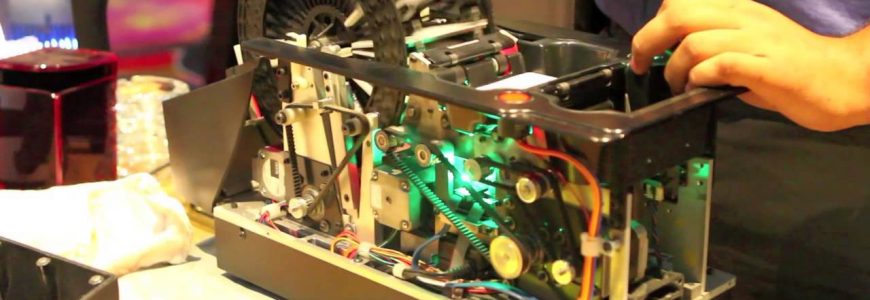
The first shuffling devices can be traced back to the end of the 19th century, when they were using mechanical tricks to distribute cards. By the late 20th century the modern automatic machines emerged and have since become widely available not only for professional, but for amateur use as well. Most shuffling machines work by taking the unshuffled cards from the infeed array, followed by a form of an automated shuffling technique and card ejection. There are two types of shuffling machines used today: The Automatic Shuffling Machine (ASM), and The Continuous shuffling machine (CSM).
ASM
The Automatic Shuffling Machine, also known as a “batch” shuffler, has been around for some time now and can shuffle an entire deck in one single operation. Most models usually contain a card holder where the dealer feeds anywhere between one to eight decks of cards, depending on the device. After the press of a button the machine starts to randomly discharge cards through ejection arrays into a shuffled card receiver where the ejected cards are formed into a shuffled card array. The dealer then collects the cards and the machine goes to idle until it needs to be used again.
CSM
The Continuous Shuffling Machine is a form of an automated shuffling device as well, even though it works slightly different. As the name implies, this device is always shuffling cards and will spit them out one by one as needed. Because of the constant mixing, when placed back, the cards from the previous hands have a chance to re-appear in future ones, making any card-counting attempts obsolete. The original continuous machines employ an elevator system which moves up and down while the shuffler randomly inserts cards into one of the elevator’s shelves. One of the shelves is then randomly chosen to be delivered to the dealing shoe. Other types of continuous shufflers use a more linear design, however essentially they all do the same thing.
Card shuffling machines have to be designed and constructed carefully, otherwise they can create biased results, which will defeat one of their primary goals. Other issues can also occur within the process, like card-jamming, system failures or tearing of the cards, however the most recent shuffling machines are computer-controlled and eliminate most of the problems.


